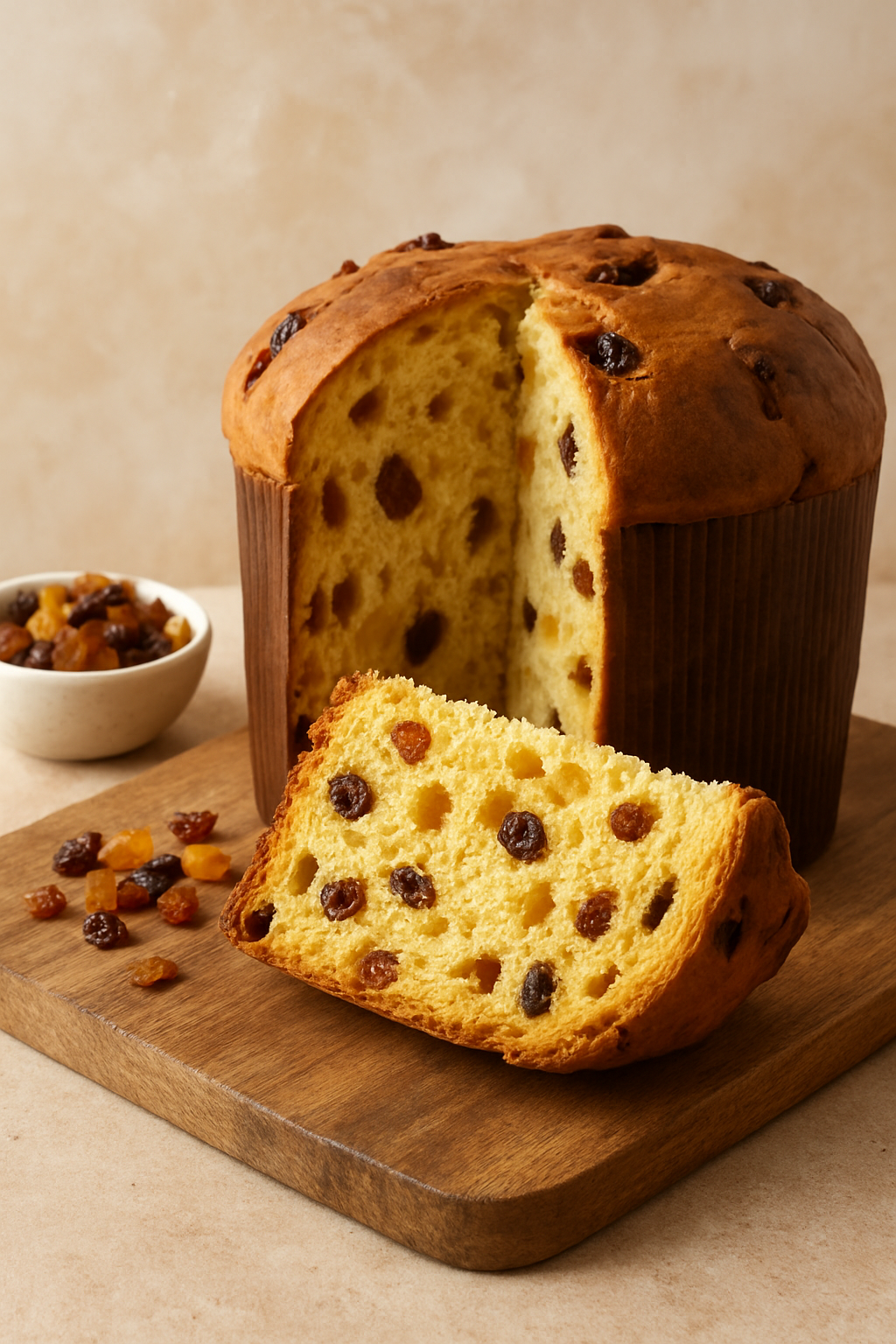
Panettone is one of the most iconic and beloved traditional Italian holiday breads, celebrated for its tall, domed shape, incredibly soft texture, and aromatic blend of dried fruits and citrus. This festive sweet bread is enjoyed around the world during Christmas and New Year, and its rich, buttery flavor combined with light, airy dough makes every slice unforgettable. Whether enjoyed with coffee, wine, or as a special holiday treat, panettone remains a timeless symbol of celebration and warmth.
This recipe will guide you through the entire process of making real homemade panettone—from preparing the enriched dough, developing the gluten through resting and kneading, and incorporating flavorful dried fruits, to achieving that lofty, tender crumb that defines a traditional panettone. With clear instructions and expert tips, you’ll learn how to master this classic dessert and create a centerpiece worthy of any holiday table.
Whether you are an experienced baker or a curious beginner eager to try something special, this recipe will help you bring the magic and aroma of freshly baked panettone into your own kitchen and impress your family and friends with this cherished Italian delicacy.
Preparing the Perfect Panettone Dough
The dough is the heart of panettone—rich, buttery, and extremely elastic to achieve the characteristic tall, fluffy texture. The secret behind authentic panettone lies in its long fermentation, proper kneading, and quality ingredients such as eggs, butter, vanilla, and citrus zest.
For the dough, you will need:
- 4 cups all-purpose flour
- ½ cup granulated sugar
- ¼ teaspoon salt
- 2¼ teaspoons active dry yeast (1 packet)
- ½ cup warm milk (not hot)
- 4 large eggs, room temperature
- 1 tablespoon pure vanilla extract
- Zest of 1 orange and 1 lemon
- ½ cup unsalted butter, softened
- 1 tablespoon honey (optional, enhances fermentation)
Instructions for the dough
In a small bowl, dissolve the yeast in warm milk and let it sit for 5–10 minutes until foamy.
In a large mixing bowl, combine the flour, sugar, and salt. Add the eggs, vanilla extract, citrus zest, honey if using, and the activated yeast mixture. Mix until a sticky dough forms.
Add the softened butter gradually, kneading as you go. Continue kneading for 10–12 minutes, either by hand or using a stand mixer with a dough hook, until the dough becomes smooth, elastic, and slightly glossy.
Transfer the dough to a lightly greased bowl, cover it with plastic wrap, and let it rise in a warm place until doubled in size—about 1½ to 2 hours.
Punch down the dough gently, cover again, and refrigerate for at least 4 hours or overnight. This resting period improves texture and flavor.
Preparing the Flavorful Fruit Filling
The filling is what gives panettone its traditional festive aroma—candied citrus, raisins, and dried fruits soaked in fragrant liquids. High-quality fruits will greatly enhance the final result.
Ingredients for the filling:
- 1 cup raisins
- ½ cup candied orange peel or mixed candied fruit
- ½ cup chopped dried apricots or cranberries (optional)
- 3 tablespoons rum, brandy, or orange juice
- ½ teaspoon almond extract (optional)
Instructions for the filling
In a small bowl, combine the raisins and dried fruits with the rum or orange juice. Let them soak for at least 1 hour or up to overnight to plump up and absorb flavor.
Drain any excess liquid before adding the fruits to the dough. This helps keep the dough from becoming too wet.
Incorporating the Filling and Shaping the Panettone
Once the dough has rested and the fruits have been soaked, it’s time to bring everything together and shape the panettone.
On a lightly floured surface, roll out or press the dough gently into a large rectangle. Scatter the soaked fruits evenly over the surface. Fold the dough over the fruit mixture and knead lightly until all fruits are evenly incorporated.
Shape the dough into a smooth ball and place it into a traditional paper panettone mold or a deep, tall baking pan lined with parchment paper.
Cover the dough loosely and allow it to rise again for 1 to 2 hours, or until it reaches the top of the mold.
Preheat your oven to 350°F (175°C). Using a sharp knife, make a shallow cross-shaped cut on top of the dough. Place a small piece of butter in the center of the cut for added richness during baking.
Bake the panettone for 40–50 minutes, checking occasionally. If the top browns too quickly, cover it loosely with foil.
The panettone is ready when a skewer inserted into the center comes out clean.
Allow it to cool completely before slicing. Traditional panettone is often hung upside down after baking to maintain height, but this step is optional for home baking.
Tips for Success and Flavor Variations
Making panettone at home may seem challenging, but with time, patience, and the right techniques, it becomes an enjoyable and rewarding process. Here are some tips to guarantee great results:
- Knead thoroughly to develop gluten—it gives panettone its signature airy structure.
- Use room-temperature ingredients for smoother incorporation.
- Allow enough rise time; rushing fermentation leads to dense bread.
- Soak fruits long enough to ensure they stay soft and flavorful in the final loaf.
- Let the dough rest overnight in the refrigerator to enhance flavor.
Delicious variations to try:
- Add chocolate chips instead of dried fruits for a modern twist.
- Mix in pistachios, almonds, or hazelnuts for added crunch.
- Incorporate a teaspoon of orange or almond liqueur for a fragrant adult version.
- Add a swirl of Nutella or pastry cream for a decadent filling.
- For a citrus lover’s version, increase the lemon and orange zest.
Conclusion
Homemade panettone is a celebration of aroma, flavor, and craftsmanship—soft, buttery dough enriched with sweet fruits and baked to golden perfection. With this recipe, you have everything you need to create an authentic Italian panettone at home, from preparing the enriched dough to mastering the rise and baking stages.
With patience and practice, you’ll be able to perfect this festive classic and delight your guests with a stunning homemade treat that’s both impressive and deeply satisfying. Whether enjoyed as a holiday centerpiece or a special indulgence, homemade panettone brings the charm and warmth of Italy’s culinary tradition to your table with every slice.